
Before the modern city
Calusa communities shaped Southwest Florida for centuries, building complex settlements, canals and shell works and sustaining a powerful maritime society across the estuaries.
The complete topic is displayed directly below.
Fort Myers grew from an Indigenous homeland and river corridor into a military outpost, cattle and trading center, winter retreat, county seat and modern Southwest Florida city.
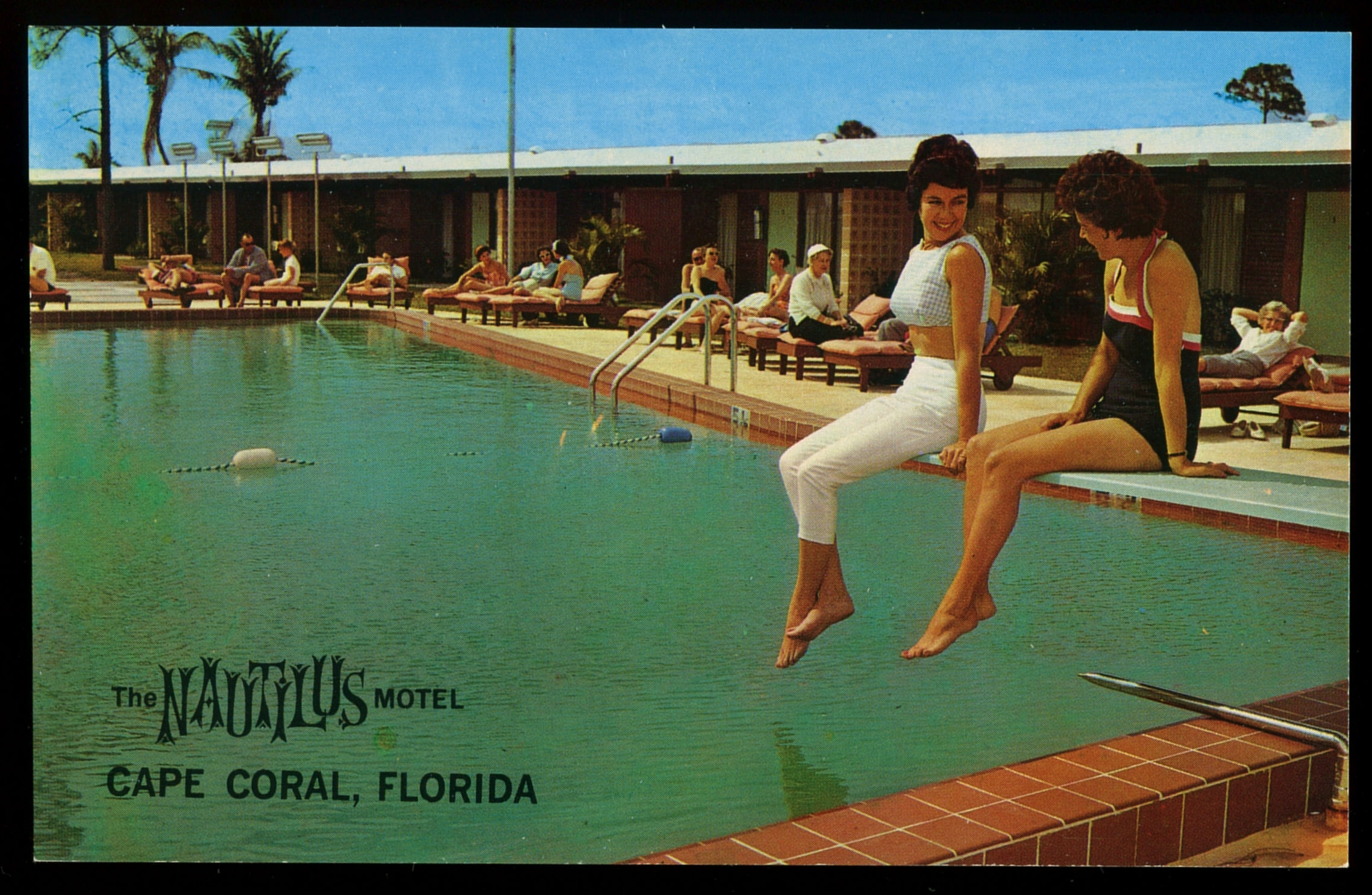
The Caloosahatchee linked Fort Myers to fishing grounds, Indigenous trade, cattle shipment, agriculture, tourism and regional growth. Its riverfront remains central to the city’s identity.
Calusa communities shaped Southwest Florida for centuries, building complex settlements, canals and shell works and sustaining a powerful maritime society across the estuaries.
A United States military post was established during the Seminole Wars and became known as Fort Myers, traditionally associated with Colonel Abraham C. Myers.
Union forces reoccupied the former fort, which became the site of the 1865 Battle of Fort Myers, one of Florida’s southernmost Civil War engagements.
Settlers, cattle interests, river transportation and trade helped form a permanent community along the Caloosahatchee.
Fort Myers developed as a town and was incorporated. Thomas Edison acquired his McGregor Boulevard riverfront property in 1885.
Rail connections, agriculture, tourism and the Florida land boom accelerated growth and shaped today’s downtown historic character.
Fort Myers’ African-American community built schools, churches, businesses and cultural institutions despite segregation. Williams Academy and McCollum Hall preserve important parts of that history.
Preservation and redevelopment helped reestablish the River District as a residential, cultural, dining and entertainment center.
Historical context: Accounts can differ in dates, terminology and interpretation. Consult museums, archives and Indigenous and community-history organizations for deeper study.
The former direct photograph feeds blocked public display, so the unreliable images were removed. Each record below opens its current official Florida Memory catalog page, where the photograph and full archival description can be viewed.
An Indigenous shell mound reflecting human history that long predates the modern city.
State Archives of Florida, Florida Memory · Image N035550View official archive record ↗The Stadler mansion on the Caloosahatchee at Gasparilla Drive.
State Archives of Florida, Florida Memory · Image N030953View official archive record ↗Fort Myers’ early central business district as commerce expanded near the river.
State Archives of Florida, Florida Memory · Image N030968View official archive record ↗The landmark riverfront hotel, built in 1897–98 and demolished in 1948.
State Archives of Florida, Florida Memory · Image RC09782View official archive record ↗The rail connection that accelerated agriculture, tourism and the 1920s building boom.
State Archives of Florida, Florida Memory · Image N030933View official archive record ↗A compact riverfront settlement long before the city’s modern metropolitan growth.
State Archives of Florida, Florida Memory · Image PR03313View official archive record ↗An early civic institution serving a rapidly developing mid-century city.
State Archives of Florida, Florida Memory · Image PR03327View official archive record ↗Thomas Edison, naturalist John Burroughs and Henry Ford together in Fort Myers.
State Archives of Florida, Florida Memory · Image RC09776View official archive record ↗Thomas Edison with the automobile presented by his friend and neighbor Henry Ford.
State Archives of Florida, Florida Memory · Image RC11236View official archive record ↗A period portrait of the inventor whose winter estate became a defining local landmark.
State Archives of Florida, Florida Memory · Image N030918View official archive record ↗Sightseers touring the preserved chemical laboratory at the Edison home.
State Archives of Florida, Florida Memory · Image C679786View official archive record ↗All catalog records: State Archives of Florida, Florida Memory. No image is hotlinked or copied by this guide.
Historic homes, gardens, laboratory and museum interpreting two internationally known winter residents.
Official resource ↗Regional history and science exhibits, including Southwest Florida’s Indigenous and pioneer history.
Official resource ↗African-American education, community life and leadership in Lee County.
Official resource ↗The 1938 hall became a major Black commercial and entertainment center.
Official resource ↗Historic buildings, brick streets, cultural venues and a revived waterfront district.
Official resource ↗A museum built atop an ancient Calusa shell mound on Estero Island.
Official resource ↗Use regional archives and cultural organizations to hear multiple community perspectives.