TRANSLATE THIS GUIDESelect your language
Automatic translation
SELECTED GUIDE

Steve Koffman’s Complete Southwest Florida Real Estate Guide

The complete topic is displayed directly below.

← Back to Directory
WHEN IT IS YOUR HOME, EXPERIENCE MATTERS!239-229-6152
PROPERTY INTELLIGENCE

Not all Cape Coral waterfront properties are the same

The right property begins with how you plan to use the water. Compare access, bridge limits, maintenance, flood exposure and resale before falling in love with the view.

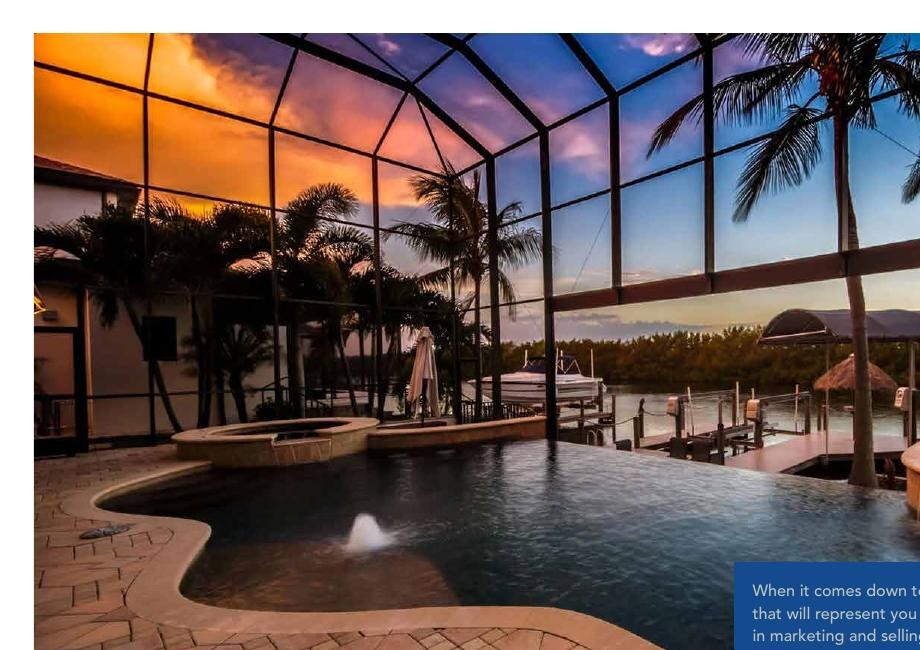
Southwest Florida canal home and boat at sunset
Cape Coral waterfront lifestyle
WATERFRONT TYPES

Match the water to the boat and lifestyle

These categories are a starting point. Individual routes, canals, docks, lifts and restrictions must be checked property by property.

Direct sailboat access

WHY BUYERS LIKE IT

No fixed bridges between the property and open water. Best for tall boats and sailboats; often commands a premium.

WATCH FOR

Higher acquisition cost; route length, channel depth, tide and lock conditions can still matter.

Gulf access with bridges

WHY BUYERS LIKE IT

Saltwater boating access at a broader range of prices.

WATCH FOR

Your boat’s true air draft must fit every bridge on the route—with a safety margin for tide, load and antennas.

Spreader waterway / preserve

WHY BUYERS LIKE IT

Wide water, privacy, sunsets and nature views along the western edge.

WATCH FOR

Routes may be longer; shallow water, manatee zones and environmental protections affect use.

Riverfront

WHY BUYERS LIKE IT

Expansive views and fast access to the Caloosahatchee.

WATCH FOR

Greater wave, wake, wind and storm exposure; seawall, dock and insurance diligence is critical.

Freshwater canal or lake

WHY BUYERS LIKE IT

Fishing, kayaking and attractive water views—often at a lower entry price.

WATCH FOR

Weirs separate these systems from saltwater. There is no boat route to the river or Gulf.

Marina or basin condominium

WHY BUYERS LIKE IT

Amenities and possible deeded or leased slips with less individual exterior maintenance.

WATCH FOR

Review slip dimensions, assignment rights, HOA rules, reserves and assessments.

Dry lot near a ramp or marina

WHY BUYERS LIKE IT

No private seawall expense and often a lower purchase price.

WATCH FOR

No backyard dock; storage, launch access and marina costs replace that convenience.

SEAWALLS

The structure protecting the lot

A common Cape Coral seawall uses interlocking precast concrete panels, a reinforced concrete cap and tieback rods connected to buried anchors. Drainage and stable backfill are as important as the visible face. Vinyl or composite systems are also used.

There is no safe “age-only” answer.

Concrete seawalls can serve 30–50+ years, and some much longer, when design, soils, tiebacks, drainage and maintenance are favorable. Salt exposure, corrosion, storms and boat wake can shorten service life. Have a qualified marine contractor inspect the wall.

Warning signs to investigate

  • Cracked or spalling cap concrete
  • Exposed or rust-stained reinforcing steel
  • Bowing, leaning or separated panels
  • Sinkholes or soil loss behind the wall
  • Failed tiebacks or unstable anchors
  • Poor drainage or recurring washout
  • Dock or lift loads stressing the cap
ELEVATION CERTIFICATES & VALUE

The certificate documents the building—not merely the flood-zone color

An Elevation Certificate records surveyed building elevations and connects them to the FEMA map, base flood elevation (BFE) and vertical datum. It is not an appraisal, an insurance quote or a document that removes a property from a flood zone.

1

Read the measurements

Confirm the map panel and effective date, flood zone, BFE, lowest-floor or first-floor height, adjacent grade, foundation/enclosure details and elevations of building equipment.

2

Use it during due diligence

Compare the living floor with the current BFE and local freeboard requirement. Ask an insurance professional to quote the exact property—with and without certificate data—before the inspection period expires.

3

Understand market impact

Elevation can influence expected flood damage, insurance cost, renovation flexibility, lender comfort and the future buyer pool. Those factors can affect marketability and value, but no elevation creates a guaranteed premium or sale-price adjustment.

Official starting points: Florida Division of Emergency Management certificate-search guidance · FEMA: Understanding Elevation Certificates · FEMA Map Service Center

THE FEMA 50% RULE

Often called “50/50”—but the test is substantial improvement or damage

For a below-compliant building in the Special Flood Hazard Area, if the cost of improvements or the cost to restore damage equals or exceeds 50% of the structure’s market value before work—or immediately before damage—the building generally must be brought into current floodplain compliance. Land value is excluded.

Repair estimates must reflect the work needed to return the building to its before-damage condition, and local officials make the formal determination. Before signing a renovation contract, ask the correct city or county floodplain office for a written, property-specific review.

50%

project or repair cost ÷ pre-work structure value

HOW LEE COUNTY GOVERNMENTS HAVE DIFFERED

The federal threshold is shared; local look-back policies have changed

FEMA supplies the minimum framework, while each participating city or county administers its adopted ordinance. The history below explains why two similar homes in different jurisdictions may have accumulated past permits differently.

CAPE CORAL

Five-year look-back removed in 2022

Past: Cape Coral added repair and improvement costs from the prior five years.

Change: Ordinance 96-22 removed the local cumulative-impact language after Hurricane Ian. The base 50% test and flood-code compliance requirements remain.

Cape Coral ordinance summary ↗
UNINCORPORATED LEE COUNTY

Most properties shifted to permit-by-permit

Past: The County used a five-year cumulative period for most properties.

Change: Ordinance 22-30 moved most properties to a permit-by-permit approach; FEMA-designated repetitive-loss properties retained a 12-month cumulative review.

Lee County Ordinance 22-30 ↗
FORT MYERS BEACH

No general cumulative clause

Past and present guidance: The Town’s post-Ian FAQ says its ordinance does not include a general five-year or similar cumulative clause.

The 50% threshold still applies to the full cost of a substantial improvement or restoring substantial damage.

Town 50% Rule guidance ↗
SANIBEL

Earlier local standards were more restrictive

Past: Sanibel used a five-year cumulative period and a lifetime floor-area restriction; City records say the look-back had previously been seven years.

Change: The City moved away from those higher local standards in 2016. Its current packet applies the 50% project or repair test and requires supporting valuation and cost documents.

Sanibel building forms and FEMA packet ↗
History is not a permit decision.Boundaries, ordinances and administrative practices can change. Verify jurisdiction, current code, prior permits, repetitive-loss status and the written calculation with the responsible floodplain office before relying on a renovation budget.
LOMR-F & FEMA MAP CHANGES

A LOMR-F is based on fill—it is not an Elevation Certificate

A Letter of Map Revision Based on Fill is FEMA’s determination that a structure or parcel raised with fill meets the technical criteria to be removed from the mapped Special Flood Hazard Area. In Cape Coral, it is the most common map-change request because fill was widely used during development.

LOMA

Natural ground

A Letter of Map Amendment is generally used when surveyed natural ground or the structure’s lowest adjacent grade is already high enough and the effective map placement may be incorrect.

LOMR

Broader map revision

A Letter of Map Revision can formally change effective floodplain boundaries, BFEs or floodways, often using updated engineering across a larger area.

A LOMR-F changes a map determination—not the physical flood risk.It may remove the federal mandatory-purchase requirement, but the lender makes the final insurance decision and coverage may remain prudent. Confirm the letter covers the correct structure or parcel and is reflected in the current property records.

Official references: Cape Coral LOMA / LOMR-F process · FEMA: LOMA and LOMR-F · FEMA: LOMR and CLOMR

PERSONAL WATERFRONT HELP

Want a waterfront due-diligence checklist for a specific property?

Send Steve the address and your boat details. He can help you evaluate access, bridges, seawall, elevation and due-diligence questions before you commit.